Poles see the threats, but they are still not prepared for them. PCK research
date
7 October 2026
category
How do Poles assess the risk of crises and disasters? Are they prepared with supplies, an action plan, and an evacuation backpack? Who do they trust when they need information about safety? Answers to these questions come from the study “The Preparedness of Polish Society for Disasters and Catastrophes,” conducted on behalf of the Polish Red Cross by Zymetria.
In August 2026, a nationwide study* was conducted on behalf of the Polish Red Cross regarding the preparedness of Polish women and men for crisis situations and disasters. The results show a clear discord: Poles recognize specific threats but do not translate this awareness into practical preparations.
Specific threats are more real than a 'crisis' as such
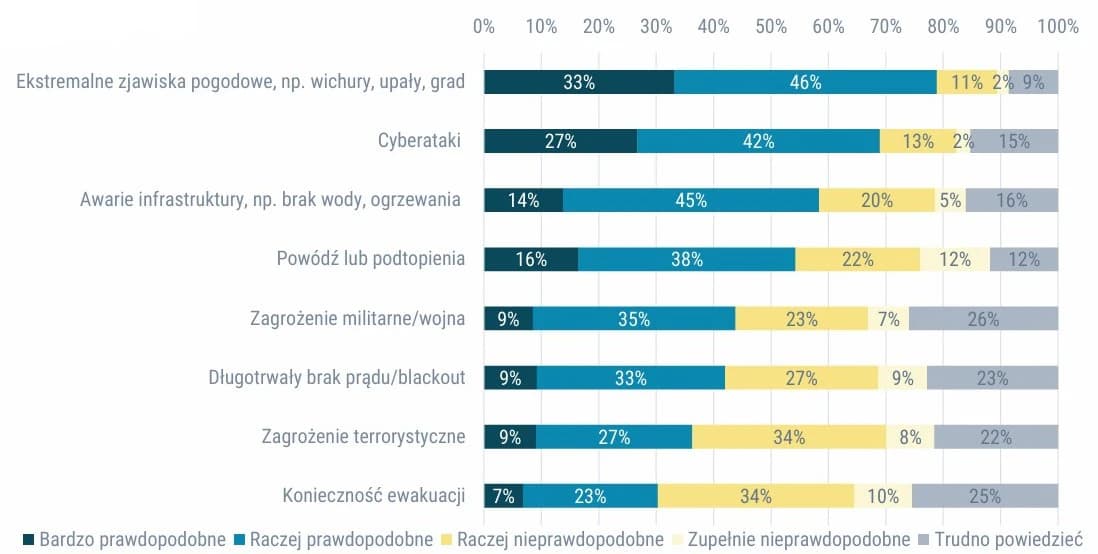
According to the study, only 37% of respondents consider it likely that within the next 2–3 years they or their family will have to face a crisis or disaster situation. However, they already recognize specific scenarios as more real.
The highest probability is attributed to the occurrence of extreme weather phenomena, such as storms, heatwaves, or hail – 79% of respondents indicate them as very or fairly likely. Cyberattacks (69%), infrastructure failures, including lack of water or heating (59%), and floods and inundations (54%) are also highly rated.
Assessment of the risk of various crisis situations
Only one in four Poles believes that their household is prepared
One of the most important conclusions of the study is the low level of declared preparedness of households. Less than a quarter of respondents believe that their household is prepared for a crisis situation, and only a small part of respondents declare a full sense of readiness.
An even greater gap is evident in terms of planning. Only 29% of families have an established action plan for crisis situations – some of these plans are not known to all household members. This problem particularly affects women and older individuals. This means that simply having a plan is not always enough. In a threatening situation, every member of the household should know what to do, where to meet, and how to contact the others.
There is some necessary equipment in Polish households
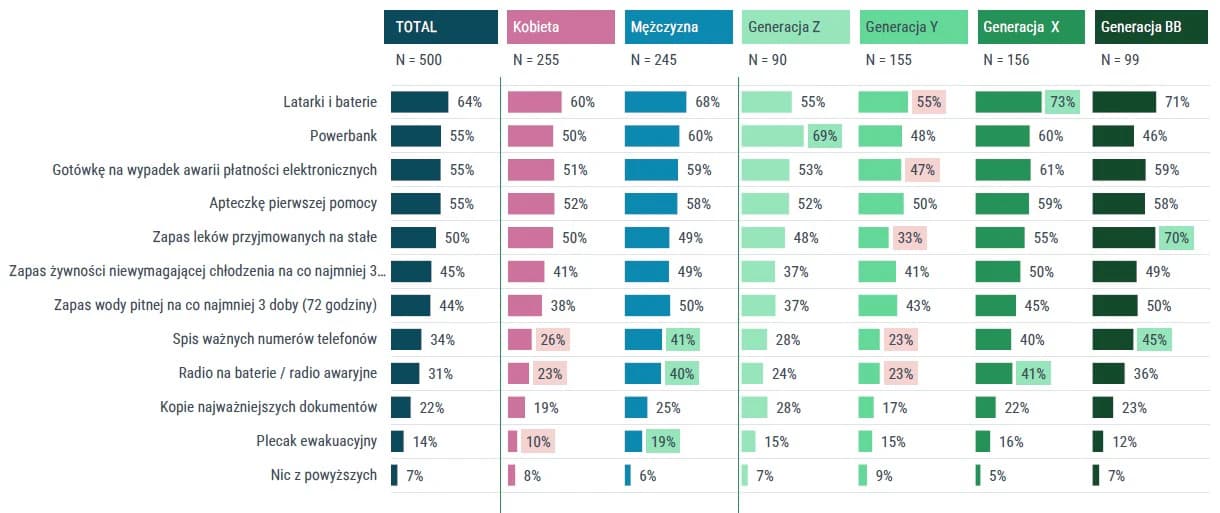
The study shows that many households already have items that may be useful during a crisis. The most common declarations of possession were of flashlights and batteries (64%), power banks (55%), cash for possible electronic payment failures (55%), first-aid kits (55%), and a stock of regularly taken medications (50%).
At the same time, resources requiring conscious planning are significantly less prepared. Only 45% of respondents declare having a food stock for at least 72 hours, and 44% have a supply of drinking water for that period. Even less frequently do Poles have copies of important documents (22%) or emergency radios (31%). Only 14% of respondents have an evacuation backpack.
Household equipment for crisis situations
"We'll manage." Are we sure?
The study also shows the difference between the declared sense of self-sufficiency and actual preparedness. Although more than half of households do not have a stock of water and non-perishable food for three days, most respondents believe that in the event of lack of access to stores, ATMs, or certain services, they would be able to function independently for at least a few days.
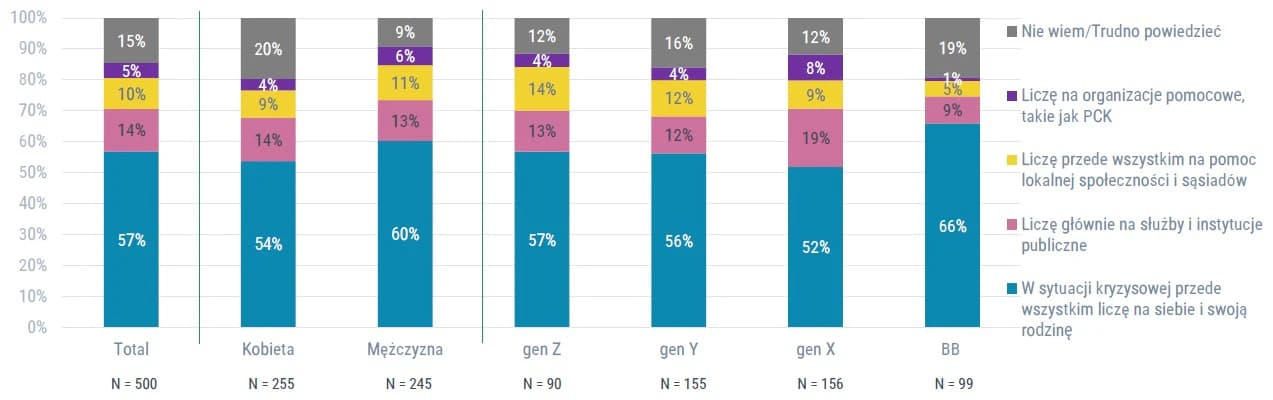
In a crisis situation, Poles primarily rely on themselves and their family. This response was indicated by 57% of respondents. Significantly fewer people declare that they would primarily rely on services or aid organizations, such as the Polish Red Cross. This shows how important it is to build one's own readiness even before a threat arises. If we want to be able to rely on ourselves and our loved ones, we must prepare in advance.
Who do Poles rely on in a crisis or disaster situation
First Aid: Knowledge Requires Regular Refreshing
An important part of the study was also the readiness to provide first aid. The results indicate a discrepancy between declared competencies and actual levels of preparedness. Respondents are most confident in calling for help, checking the response of an injured person, or securing the scene of the incident. As the difficulty of the task increases, uncertainty rises: just under half of respondents declare readiness to perform resuscitation or stop severe bleeding. Respondents feel least confident when it comes to using an AED.
This is particularly essential in the context that many people took first aid training many years ago and have not refreshed their knowledge since. Regular education and practical exercises can therefore play a key role in building readiness to act.
Knowledge that increases readiness
Building social resilience should not rely solely on warning about threats. Concrete guidelines, practical education, and solutions that everyone can implement in their own home, regardless of age, place of residence, or life situation, are needed.
The Polish Red Cross, drawing on experience gained from aid activities, wants to be close to people even when a crisis has not yet occurred – helping prepare for situations in which knowledge, skills, and readiness to act can be crucial for one's health and life as well as that of our loved ones.
*The study was conducted by Zymetria using the CAWI method on a representative sample of 500 people over the age of 18, controlled for gender, age, place of residence, and education.
Return
See also
Oct
06
security
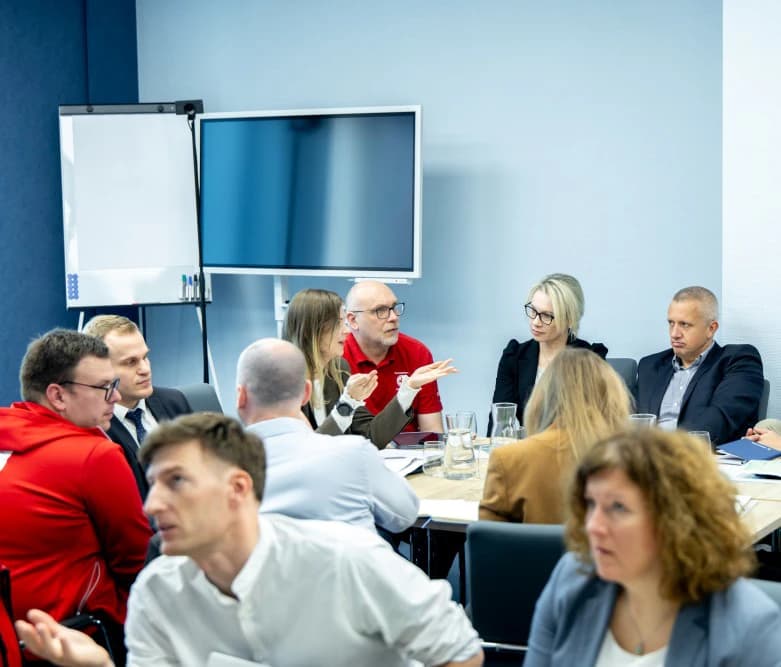
Mass evacuation from Lithuania to Poland. We are practicing.
What should be done if a mass evacuation of people, for example, from Lithuania to Poland, becomes necessary? This scenario was implemented during the Vyčio Skliautas 2026 exercise in Lithuania.
Oct
01
first aid
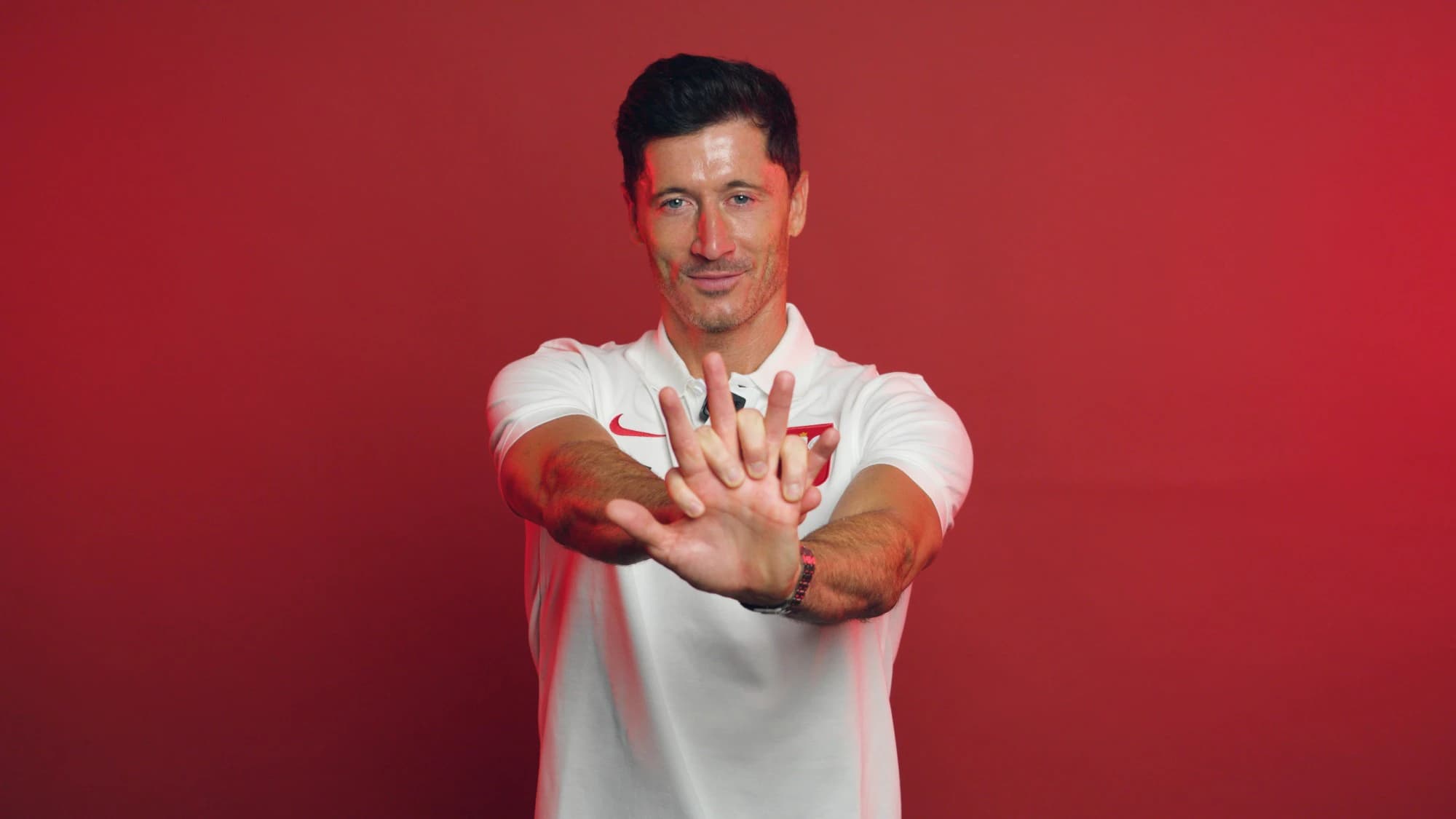
Robert Lewandowski and Polish national team: I train – I save
Robert Lewandowski, Jan Bednarek, Jakub Kamiński, Kacper Potulski, Tymoteusz Puchacz, and Wiktor Nowak – Polish national team players – encourage people to learn first aid. The Polish Red Cross and the Polish Football Association have launched the "I Train – I Save" campaign.
Sep
23
security
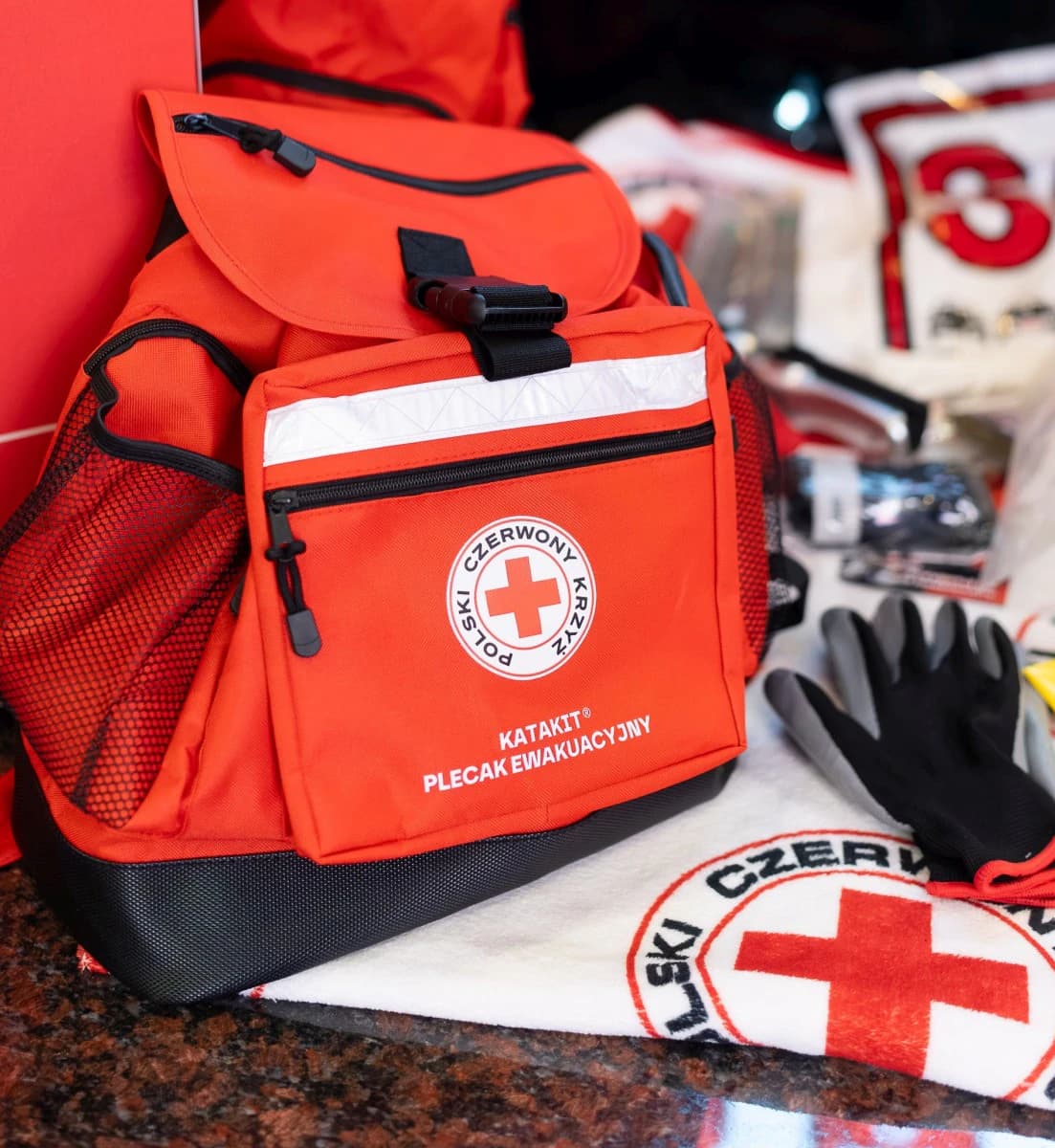
Only 4% of Poles have an emergency backpack. The Polish Red Cross presents KATAKIT®.
Most Poles believe they could cope for a few days in a crisis situation. However, data reveal a clear discrepancy between these claims and actual preparedness levels. KATAKIT®—an emergency backpack designed for the first 72 hours of a crisis—offers a solution to this gap.
Sep
14
, security
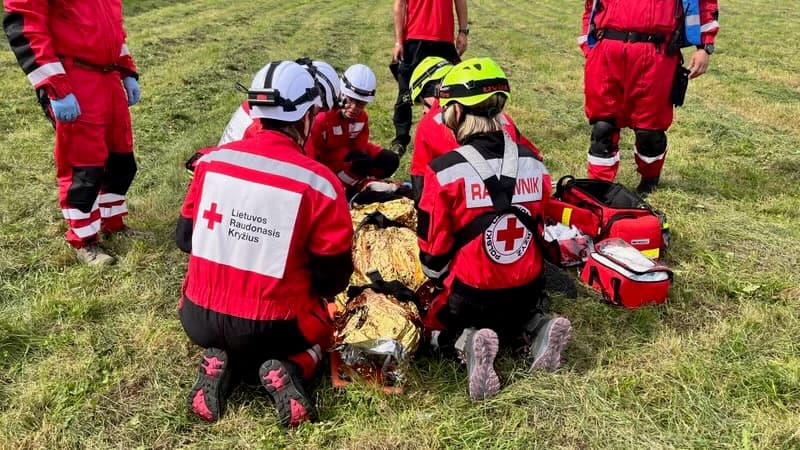
Pomerania – Reda 2026. Over 200 rescuers practiced actions in crisis situations
From September 10 to 13, the Polish Red Cross Pomerania 2026 rescue drills took place in Reda. Rescuers and officials from Poland and abroad practiced handling situations based on real industrial and humanitarian disasters. The drills ended with a family picnic.
Website sponsored by home.pl

You are currently viewing a page filtered by content from the department. Cała PolskaIf you want to view content from Cała Polskaclick the button